
So, you're looking at buying a 15kWh Lithium Battery pack in bulk, right? Sure, you'll get a better price per unit, but honestly, price alone is a pretty weak guide. What really matters is figuring out your actual load, how much energy you use daily, and how long you need the backup to last. Also, here's a big one: check if that advertised 15kWh is the nominal capacity or the usable capacity—they're often different, and that difference hits you right in the runtime. Trust me, the little details are where it's at.
So, here's the thing—when you're comparing suppliers, you really want to dig into seven practical checks that cover specs, long-term value, all that good stuff. First off, don't be shy about asking for a datasheet—you'll want to see the cell chemistry, rated voltage, continuous and peak current, and don't forget the cycle-life test conditions and operating temperature. Then, make sure the battery management system actually plays nice with your inverter—trust me, you don't want to discover that mismatch later. And finally, get the warranty terms in writing, like, explicitly written out. That saves you a ton of headaches down the road. So, you're looking at a 15kWh lithium battery pack wholesale order—nice. Before you commit to buying in bulk, you really want to check a few things: can you get samples to test? How consistent is their production run to run? What about packaging—is it solid enough for shipping? And don't forget to ask about after-sales support; if something goes wrong later, you'll be glad you did. Also, keep in mind that a super low quote might mean they're cutting corners on protections or service. You know the saying—measure twice, cut once. Better to be safe than sorry!
Here's the thing: when you search for '15kWh solar battery lithium battery', you'll see a bunch of products. But not all of them are the same – the specs can differ quite a bit. So don't just rely on the label. Compare the usable capacity and what components are included – that's what really matters. And while you're at it, ask about how it behaves in extreme temperatures or when you discharge it deeply. Also, check if the monitoring app or dashboard shows warnings clearly – you don't want to miss an alarm. Here’s the thing: small details can expose mismatches early on. But honestly, no checklist is a substitute for an independent technical review—especially when you’re trying to integrate batteries with gear that’s already on site. A good supplier will answer direct questions clearly and back it up with verifiable docs. Still, one easy thing to overlook: plan for future loads, not just what you’re handling today. That extra sanity check might just save you from a costly redesign.
A 15kWh label describes stored energy, not the power a battery can deliver. With a steady 1kW load, 15kWh suggests 15 hours in ideal conditions. Real runtime is shorter because inverters consume energy, and temperature and discharge limits matter. That number can mislead. Check whether the quoted capacity is nominal or usable. For example, if 90% is usable, a 15kWh pack provides 13.5kWh before conversion losses. Compare quotes by usable kilowatt-hours, continuous output, and the test conditions behind any cycle-life claim. A simple calculation helps, but it is not a full load assessment.
Chemistry shapes the trade-offs. Lithium Iron Phosphate (LFP) is often selected for thermal stability and long cycle life, while nickel-manganese-cobalt (NMC) commonly offers greater energy density by weight. The IEA’s Global EV Outlook 2024 reports that LFP reached nearly 40% of the global electric-car battery market in 2023. That figure describes EV batteries, not every stationary pack. Ask suppliers for chemistry-specific test data. NREL’s 2024 Annual Technology Baseline uses 85% round-trip efficiency for utility-scale battery storage; treat this as a system benchmark, not a guarantee for a 15kWh home pack. When comparing a Lithium Ion Battery 15kwh offer, check its usable capacity at your expected temperature and discharge rate. Specifications still leave room for surprises.
A 15 kWh lithium battery pack is only useful when its voltage suits the inverter. Compare the battery’s nominal voltage with the inverter’s required DC voltage, then check the full operating range. A label that says “48 V” is not enough; actual voltage changes during charging and discharge. Small mismatch, big trouble. Confirm the inverter accepts that range before paying.
Check more than voltage. The inverter must support the battery’s continuous charge and discharge current, plus any communication method required by its battery management system. Ask for the interface details and written compatibility confirmation. I would not rely on a seller’s quick “yes”; that answer can miss model-specific limits. Also check whether the system allows parallel packs, and whether the inverter needs settings adjusted for lithium chemistry.
Match capacity to real use. A 15 kWh rating may not mean all 15 kWh are available, so ask about usable capacity and reserve settings. List the loads you expect to run, such as a refrigerator, lights, or a water pump, and note their startup surges. Check cable size, protective devices, installation space, and temperature limits against the manuals. These details feel tedious. They prevent expensive surprises. Have a qualified installer review the system design, especially when adding batteries to existing equipment.
Compare the approximate amp-hour capacity of a 15 kWh pack at different nominal system voltages.
Buying checklist: confirm battery voltage; check the inverter’s supported voltage range; verify continuous and peak current; match chemistry and charge settings; account for usable energy and reserve; check communication requirements; and confirm protection and installation requirements. Amp-hour values are calculated as 15,000 Wh ÷ nominal voltage and are ideal estimates, excluding losses and usable-capacity limits. Always confirm compatibility with the equipment specifications.
When comparing a 15kwh Lithium Solar Battery, ask for the cell type, grade, and production traceability. A low price can hide mixed cell batches. Request capacity test results and cycle-life data, including the temperature and discharge conditions used. Figures without test conditions are hard to compare. Check whether the stated 15 kWh is nominal or usable energy, and confirm it matches your inverter.
Look closely at the battery management system (BMS). It should monitor cell voltage and temperature, balance cells, and protect against overcurrent and excessive charging or discharge. Ask how the BMS communicates with your inverter and whether fault history can be reviewed. Small details matter. A feature list alone does not prove the system works well under real household loads.
Check safety certificates and test reports for the exact battery model, not just a similar product in the supplier’s catalog. Confirm that documents come from a recognized testing body and match the unit’s configuration. Ask about enclosure protection, thermal safeguards, and installation requirements. One imperfect but useful check: compare the report’s model number with the label on a sample unit. Paperwork can look convincing, yet a mismatch deserves a pause.
When sourcing a 15kwh Battery, don’t treat the cycle-life figure as a promise of identical service in every installation. Ask how cycles were tested, including discharge depth, temperature, and the capacity remaining at the stated endpoint. A rating measured under gentle laboratory conditions may not match a hot utility room or daily deep discharge. Request the test conditions in writing.
Read the warranty beyond its headline duration. Check whether coverage ends at a set number of cycles, a calendar date, or a minimum retained capacity. Clarify exclusions for storage, installation, and operating temperature, plus who pays for inspection and shipping. The fine print matters. If the terms are vague, ask for a sample claim process before placing a bulk order. I would still compare the written warranty with the supplier’s actual support record; paperwork alone can’t show how quickly issues get resolved.
Estimate performance using the site’s real loads, not just the battery’s nominal energy. A shop running lights and refrigeration overnight has different needs from a home with brief, high-power appliance use. Confirm usable capacity, continuous output, surge rating, and inverter compatibility. For instance, compare logged overnight consumption with the battery’s usable energy, then leave a practical reserve. One detail is easy to miss: cold or heat can affect available output. Forecasts are imperfect, so check how the system behaves across the site’s expected temperatures.
For a 15kWh Lithium Battery Pack wholesale order, check how long the supplier has built comparable systems. Ask for recent project examples, operating conditions, and references you can verify. A Battery Lithium Pack designed for a warm warehouse may need different thermal planning from one used in a cold workshop. Ask who handles cell selection, pack assembly, and technical support after delivery. Specific answers matter. A polished brochure is not evidence.
Production capacity should match your order size and schedule. Request a realistic monthly output, current lead time, and details about how production is tracked. Then examine quality control: ask how incoming cells are checked, how connections are inspected, and whether each finished pack receives documented electrical and functional tests.
Look for serial-level traceability and sample test records. Small details count. If possible, review the inspection process or arrange an independent pre-shipment check. A large factory is not automatically a safer choice; I have seen buyers assume that, and it can be wrong. Compare the supplier’s records with your own requirements, and clarify any gaps before paying a deposit.
For a 15kWh lithium battery pack, compare the delivered cost, not just the unit price. BloombergNEF’s 2024 Battery Price Survey reported an average lithium-ion pack price of $115 per kWh, 20% below 2023. That implies about $1,725 for 15kWh at the broad market benchmark, not a wholesale quote. The figure does not account for a specific pack’s battery management system, enclosure, testing, warranty, or supplier margin. Ask for itemized pricing at several quantities, such as 1, 10, and 50 units. Small orders sting. Confirm whether the minimum order applies to one model or allows mixed configurations.
Shipping can change the calculation. Drewry’s World Container Index reached $5,937 per 40-foot container in July 2024, showing how sharply freight rates can move. It is a general container index, not a battery shipping quote. Request a written estimate that separates freight, insurance, handling, and any destination charges. Also confirm the pack’s gross weight and dimensions; a compact-looking unit may take more pallet space than expected. Lithium battery shipments require appropriate transport classification and documentation, so ask who prepares them and whether the quote includes compliant packaging.
Compare like with like: delivery terms, payment schedule, lead time, and warranty coverage should match across suppliers. A low minimum order may still carry a high per-unit freight cost. I would check the landed-cost worksheet twice; it is easy to overlook fees when quotes arrive in different formats.
Before ordering a 15kWh lithium battery pack, request documents that match the exact model and production batch. Check the datasheet for nominal voltage, usable capacity, charging limits, and operating temperature. Ask for relevant test reports and transport documentation, such as UN 38.3 test summaries where applicable. A polished brochure is not enough. Confirm that the serial numbers on the shipment can be traced to the supplied records.
After-sales support matters when a battery reports a fault or loses communication with its inverter. Get the warranty period, exclusions, claim process, and expected response time in writing. Ask whether troubleshooting is available remotely and which parts can be replaced locally. Clarify what evidence is needed for a claim, such as fault codes, installation photos, or charge logs. Fine print can change the practical value of a warranty.
Delivery terms should spell out who arranges freight, insurance, customs clearance, and final unloading. Confirm the number of pallets, package dimensions, estimated transit time, and what happens if cartons arrive damaged. A quoted ship date is not an arrival date. Easy to overlook. Ask for tracking details and a written process for reporting damage before signing the delivery receipt.
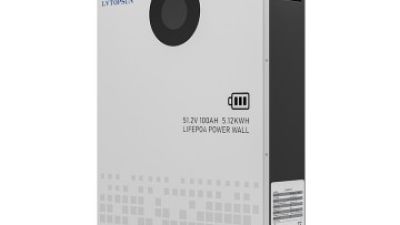
Residential solar storage helps households use more of the electricity their panels produce. The LVTS-512100-G3 stores up to 5.12kWh, with a rated voltage of 51.2V and capacity of 100Ah. During sunny hours, a compatible solar inverter can direct surplus energy into the battery; later, the stored electricity may support household loads when solar production is low. The amount of backup available depends on power use, system settings, and the battery’s usable capacity.
Before choosing a battery, estimate daily electricity consumption and identify essential appliances you may want to run after sunset or during an outage. Check that the inverter and battery are compatible, and confirm the system’s charging limits, installation requirements, and available space. For a home in China, local weather, roof production, electricity pricing, and household routines can all affect the right setup. Have a qualified installer assess the electrical system and configure the battery safely. Regularly review usage and charging settings to make the most of stored solar energy and manage electricity costs.
It describes stored energy, not power output. In ideal conditions, a steady 1kW load could run for 15 hours. Real runtime is shorter.
If 90% is usable, that is 13.5kWh before conversion losses. Ask whether the quoted capacity is nominal or usable.
LFP is often chosen for thermal stability and long cycle life. NMC commonly offers higher energy density by weight. Check chemistry-specific test data.
Compare the battery’s nominal voltage and full operating range with the inverter’s requirements. Also confirm current limits and communication requirements. Check the range.
List expected loads, such as a refrigerator, lights, and a water pump. Note their running use and startup surges, then compare them with usable capacity and continuous output.
Request the test conditions, including temperature, discharge depth, and the capacity remaining at the stated endpoint. Laboratory results may not match daily use. That estimate can be optimistic.
Check the coverage period, cycle limit, minimum retained capacity, and exclusions for installation or temperature. Ask who pays for inspection and shipping. Fine print matters.
Cold or heat can affect available output. Compare the battery’s temperature limits with conditions at the installation site, and leave a practical energy reserve. Forecasts are imperfect.
Choosing a 15kWh Lithium Battery Pack Wholesale option starts with confirming that its usable capacity and battery chemistry fit your energy needs. Check the pack’s voltage, inverter compatibility, and any installation or system requirements before comparing suppliers. Cell quality, battery management features, and relevant safety certifications can help you assess how well a pack is designed to operate reliably.
Also compare cycle life, warranty coverage, and expected performance under your intended conditions. Review each supplier’s experience, production capacity, and quality-control process, then weigh the quoted price against minimum order quantities and shipping costs. Before placing an order, confirm that the required product documentation is available and clarify after-sales support, delivery schedules, and shipping terms. Considering these factors together can help you make a more informed wholesale purchase and avoid choosing on price alone.