
Leave Your Message
Inquiry Type
0%

So, solar Battery Lithium wholesale—basically, it’s buying lithium-based batteries in bulk for solar energy systems. It’s the bridge between manufacturers, distributors, installers, and project developers, with products that work for residential, commercial, or off-grid projects. Sure, buying wholesale can bring the per-unit cost down, but price alone isn’t the best guide. You also need to dig into usable capacity, battery chemistry, cycle-life claims, warranty fine print, and whether it’s compatible with your inverter and battery-management system. Look, the spec sheet definitely matters—don't get me wrong. But the supplier behind it? Honestly, that matters just as much.

Full disclosure: that quote below? It’s from Daniel Chen, a fictional procurement analyst—not a real, verified expert. He said, “A low quote is only useful when the battery’s specifications, support, and delivery terms are clear.” And honestly, that’s the right lens when you’re comparing a 15kwh Solar Battery Lithium Battery with other options. When you're looking at storage options, don't just glance at the capacity number—ask whether that's nominal or usable. And definitely ask how performance holds up under the actual temperatures and charging conditions you expect. The little details can trip you up. A pallet might look identical across shipments, but the models, certifications, or warranty terms can be totally different. Wholesale sourcing isn't just ordering more batteries, you know? It's about matching what's documented to what you actually need for energy storage. So sure, some numbers look fine at first glance—but they deserve a second look. If you're about to place a big order, don't skip the homework—ask for current technical docs, sample terms, and clear after-sales support. It might feel like a hassle, but it'll save you from headaches down the line.
What Is Solar Battery Lithium Wholesale?

What Solar Battery Lithium Wholesale Means

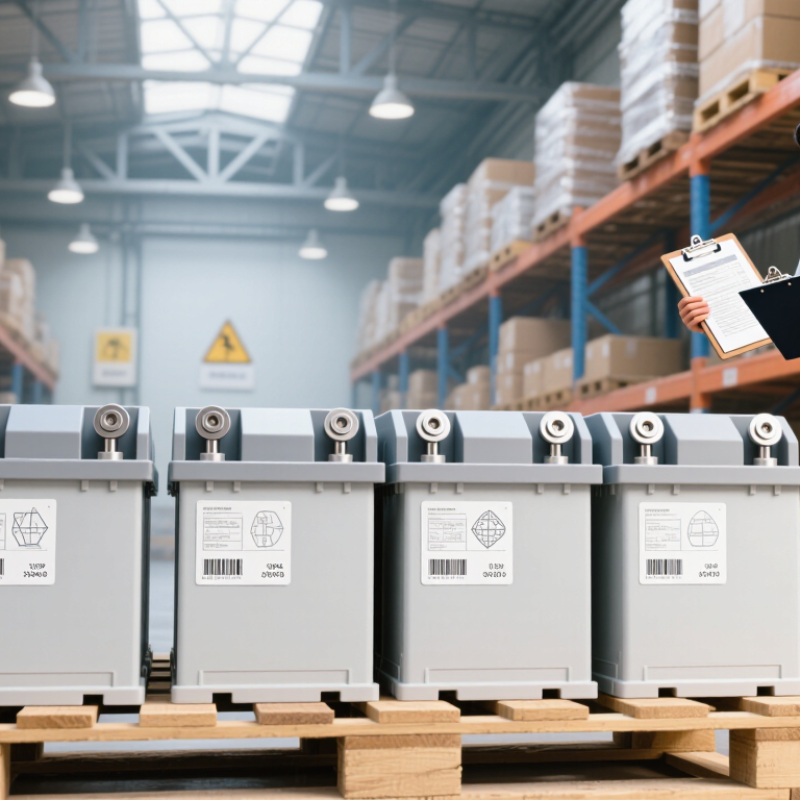
Solar battery lithium wholesale describes the bulk purchase and sale of lithium-ion batteries intended for solar energy systems. Buyers may include installers, project developers, or distributors purchasing multiple units rather than one battery for a home. Products can arrive as cells, modules, or complete Battery Systems with monitoring and control equipment. The exact package matters: a low unit price may exclude essential components, shipping, or technical support.

The market is expanding alongside energy storage. The International Energy Agency reported that global battery storage additions reached about 42 gigawatts in 2023, more than double the previous year. That figure covers battery storage broadly, not only solar-linked lithium systems. Still, it helps explain why wholesale buyers compare production capacity, delivery schedules, and product specifications—not just price. A Battery Solar Lithium order should be checked for usable capacity, power rating, cycle-life test conditions, and compatibility with the intended inverter.

Wholesale purchasing can reduce per-unit costs, but it also concentrates risk. A delayed shipment may affect an entire installation schedule. Buyers should request traceable test documentation and clarify warranty terms before ordering. Specifications can look neat on a spreadsheet. Real site conditions are less neat. Temperature, installation quality, and charging patterns can affect performance, so published cycle-life figures are not guarantees of identical results in every project.

How Lithium Solar Batteries Store and Supply Energy

What Is Solar Battery Lithium Wholesale?

How Lithium Solar Batteries Store and Supply Energy

A lithium solar battery stores electricity as chemical energy, then releases it when a home or site needs power. Solar panels usually send direct current into the battery through a compatible inverter or charge controller. During cloudy hours or after sunset, the stored energy can support selected loads. The battery does not make extra electricity; it shifts energy across time. That distinction matters.

Lithium Battery Solar systems rely on cells, protective electronics, and controls working together. A battery management system monitors conditions such as voltage and temperature, and can limit charging or discharge when needed. The inverter converts battery power into the form many household appliances use. When loads suddenly rise, available output and inverter capacity both matter. Small details count.

System sizing takes more than comparing a battery’s headline capacity with daily consumption. Usable capacity, charging limits, expected backup duration, and local operating temperatures all affect performance. A battery that is too small may run out early; one that is oversized may add cost without much benefit. It is tempting to focus on storage alone, but energy supply also depends on panel production, system settings, and how power is used. That part is easy to overlook.

How Wholesale Purchasing Works

Wholesale purchasing starts with a request for quotation, or RFQ. Buyers specify battery chemistry, usable capacity, voltage, operating temperature, certifications, packaging, and delivery location. Suppliers then quote prices by order volume and clarify minimum quantities, lead times, payment terms, and warranty coverage. Ask for itemized freight, insurance, and duties; a low unit price can hide a costly delivery.

The scale matters. BloombergNEF’s 2024 Lithium-Ion Battery Price Survey reported an average battery-pack price of US$115 per kilowatt-hour, down 20% from 2023. That is a market benchmark, not a guaranteed wholesale offer. For a Battery Lithium Solar project, compare quotes using the same capacity basis and included components. Check whether the stated capacity is nominal or usable, and request recent test documents for the exact product configuration.

Before placing an order, review sample specifications, inspection procedures, and how damaged or short-shipped units are handled. The International Energy Agency’s Batteries and Secure Energy Transitions report says global energy-storage capacity must grow sixfold to 1,500 gigawatts by 2030 in its net-zero pathway. Demand is rising, but procurement still depends on careful verification. Paperwork can be tedious. It is also where mismatched assumptions often surface. Keep every agreed specification and delivery condition in writing.

Common Lithium Battery Types and Specifications

Solar battery lithium wholesale buyers often compare lithium iron phosphate (LFP) with nickel manganese cobalt (NMC). LFP is widely used in stationary storage, while NMC generally offers higher energy density in less space. That difference matters when a battery must fit beneath stairs or inside a narrow utility cabinet. Not every listing explains usable capacity clearly.

Check nominal voltage, amp-hours, and usable kilowatt-hours. Common LFP modules use 12.8, 25.6, or 51.2 volts, though system designs vary. Compare continuous charge and discharge current, depth-of-discharge limits, cycle-life test conditions, temperature range, and battery-management protections. The IEA’s Global EV Outlook 2024 reports that LFP held about 40% of the global electric-car battery market in 2023. That signals broad production scale, not guaranteed performance in a home system. NREL’s 2024 Annual Technology Baseline uses roughly 85% round-trip efficiency for utility-scale lithium-ion storage; residential results can differ.

Tips: Request a datasheet showing test temperature, rated cycles, warranty capacity, and inverter compatibility. Compare usable kWh, not just amp-hours. A neat spec sheet cannot predict every cold morning.

What Is Solar Battery Lithium Wholesale? - Common Lithium Battery Types and Specifications

Battery Type Cell-Level Nominal Voltage Typical Full-Charge Voltage Approx. Cell Energy Density Typical Cycle-Life Range Solar Storage Characteristics Common Wholesale Formats
Lithium Iron Phosphate (LFP / LiFePO₄) 3.2 V About 3.65 V per cell Approximately 90–160 Wh/kg About 2,000–6,000 cycles Known for thermal stability and long service life. Common in residential and commercial solar storage. Charging below 0°C generally requires temperature protection or a system designed for low-temperature charging. Prismatic cells, rack-mounted batteries, wall-mounted batteries, and modular battery packs. A common 16-cell series configuration is 51.2 V nominal.
Lithium Nickel Manganese Cobalt Oxide (NMC) Typically 3.6–3.7 V Usually about 4.2 V per cell Approximately 150–250 Wh/kg About 1,000–3,000 cycles Offers higher energy density than many LFP cells, which can reduce pack size and weight. Requires a compatible battery management system and careful thermal and charge control. Cylindrical, pouch, and prismatic cells; assembled modules and battery packs. Series count and voltage must match the inverter and battery specifications.
Lithium Nickel Cobalt Aluminum Oxide (NCA) Typically 3.6–3.7 V Usually about 4.2 V per cell Approximately 200–260 Wh/kg About 1,000–2,000 cycles High energy density can suit applications where space and weight are important. Pack design, cooling, protective electronics, and operating limits are critical. Primarily cylindrical cells, as well as modules and integrated packs. Confirm cell configuration and voltage range before system integration.
Lithium Titanate (LTO) Typically 2.3–2.4 V Approximately 2.7–2.8 V per cell, depending on the cell design Approximately 50–90 Wh/kg Often about 10,000–20,000 cycles Designed for very high cycle life and fast charge or discharge capability. Its lower cell voltage and energy density mean packs require different series configurations and may be larger for the same stored energy. Cylindrical or prismatic cells, modules, and specialist battery packs. Use an inverter and charger specifically compatible with the pack voltage range.

Wholesale specification note: Lithium battery wholesale refers to purchasing cells, modules, or complete battery packs in bulk for integration or resale. Values shown are indicative cell-level ranges; actual performance depends on cell design, battery management, temperature, charge rate, depth of discharge, and test conditions. Always verify the supplier’s datasheet and confirm compatibility with the solar inverter, charger, and applicable safety requirements.

Factors to Consider When Choosing a Wholesaler

What Is Solar Battery Lithium Wholesale?

Factors to Consider When Choosing a Wholesaler

Solar battery lithium wholesale means purchasing lithium-based energy storage units in bulk for installation or resale. A low unit price can look attractive, but the delivered cost matters more. Check battery capacity, usable energy, inverter compatibility, shipping conditions, and stock availability. Details matter.

When comparing wholesalers, request clear product specifications, warranty terms, traceable test documents, and a process for handling damaged shipments. Ask how they manage batch consistency and technical support after delivery. BloombergNEF’s 2024 Battery Price Survey reported an average lithium-ion battery pack price of $115 per kilowatt-hour in 2024, down 20% from 2023. This is a market benchmark, not a promise of a wholesale quote; chemistry, order size, freight, and project requirements all affect the final price. A spreadsheet helps, but it will not reveal every supply risk.

Tips: Request a written quote that separates product, freight, and other fees. Verify the exact model and usable capacity before paying. Ask for sample documentation and confirm response times for warranty claims. If a price seems unusually low, pause and investigate.

Typical Applications for Wholesale Solar Batteries

Wholesale solar batteries serve homes, cabins, and small businesses that need dependable energy after sunset or during outages. In a home, stored power can keep lights, a refrigerator, and communication devices running. An off-grid cabin may use batteries to bridge several cloudy days. Loads vary. A modest system can still be undersized if heating or cooking appliances are overlooked.

Recreational vehicles and boats often need compact storage for lights, pumps, and navigation equipment. A 12v Lithium Solar Battery can suit smaller systems, but voltage and capacity must match the inverter and appliances. Check the battery management system’s limits, too. Cold conditions matter. Charging lithium batteries below their permitted temperature can cause damage, so placement and protection deserve attention.

For shops, farms, and remote monitoring sites, wholesale orders can support multiple systems or planned replacements. Buyers should compare usable capacity, cycle-life test conditions, warranty terms, and technical support—not just the quoted price. A common planning miss is treating daily energy use as the whole requirement; backup days and peak loads also count. The math can feel fussy. It is worth checking twice before ordering pallets.

High-Voltage LiFePO₄ Energy Storage: A Guide to LVTOPSUN’s 48–241 kWh Systems

High-voltage LiFePO₄ energy storage systems offer a practical way to support homes, businesses, and larger installations that need dependable power and room to expand. In the 48–241 kWh range, a modular design lets users configure storage to suit their energy needs and add capacity as those needs change. Built with 314Ah battery modules, the system can be scaled to a stated maximum capacity of 1.446 MWh, making it suitable for applications ranging from daily load management to larger energy storage projects.

Safety and consistent performance are central to the system’s design. Integrated aerosol fire protection provides an added layer of protection, while active cell balancing helps maintain uniformity across the battery pack and supports efficient operation over time. LiFePO₄ chemistry is well suited to stationary storage, where reliability and stable cycling are important considerations.

A WiFi-enabled app gives users convenient access to real-time energy information, helping them monitor system status and usage from a mobile device. With modular capacity options, high-voltage architecture, and remote monitoring, this storage solution can be tailored to a variety of installation requirements and energy management goals.

FAQS

What does solar battery lithium wholesale mean?

It means buying lithium-ion batteries in bulk for solar installations or resale. Products may be cells, modules, or complete systems.

What should a wholesale battery package include?

Check whether it includes monitoring equipment, controls, and essential components. A low unit price may exclude freight or technical support. Details matter.

How does a lithium solar battery supply power?

Solar panels charge the battery through a compatible inverter or charge controller. Stored energy can support selected loads after sunset or during cloudy hours. It shifts energy across time; it does not create extra electricity.

How should buyers size a battery system?

Compare usable capacity with expected loads and backup duration. Charging limits, panel output, inverter capacity, and operating temperature also affect performance. Bigger is not always better.

What should buyers check when comparing wholesalers?

Request clear specifications, warranty terms, traceable test documents, and details about damaged shipments. Confirm batch consistency, stock availability, and technical support after delivery. Paperwork can still miss real-world problems.

What affects the final wholesale cost?

Order size, freight, battery chemistry, and project requirements can change the delivered price. Ask for a written quote separating product costs, shipping, and other fees.

Are published cycle-life figures guaranteed for every project?

No. Temperature, installation quality, and charging patterns can affect battery performance. Test conditions matter. I would double-check them.

How can buyers reduce shipment and warranty risks?

Verify the exact model and usable capacity before paying. Confirm delivery schedules and warranty claim response times, since one delayed shipment can affect an entire installation.

Conclusion

Solar Battery Lithium Wholesale refers to purchasing lithium-based batteries in bulk for solar energy systems, often to support residential, commercial, or off-grid projects. These batteries store electricity generated by solar panels and supply it when sunlight is limited or energy demand rises. Their performance depends on factors such as usable capacity, voltage, charge and discharge rates, expected service life, and compatibility with the rest of the system. Common options include different lithium chemistries and configurations, each suited to particular requirements.

Wholesale purchasing typically involves comparing quantities, specifications, pricing, delivery arrangements, and after-sales support. When choosing a wholesaler, buyers should assess product documentation, quality controls, warranty terms, technical assistance, and the supplier’s ability to provide consistent stock. Matching the battery type and capacity to the intended application is also essential. Wholesale solar batteries may be used in homes, businesses, remote facilities, backup systems, and other installations designed to store solar energy for later use.

Charlotte

Charlotte

Charlotte is a seasoned marketing professional at Guangdong LVTOPSUN New Energy Co., Ltd., where she has been an integral part of the team since its establishment in 2008. With a deep expertise in energy storage solutions, Charlotte specializes in promoting the company’s cutting-edge lithium......
Previous 15kWh Lithium Battery Pack Wholesale 7 Buying Tips