Leave Your Message



Okay, so the global solar market is growing fast — no surprise there — but when it comes down to it, battery quality is what really decides how a project performs in the real world. According to IRENA’s Renewable Capacity Statistics 2025, renewable capacity additions hit 585 GW in 2024. Solar made up roughly 452 GW of that. And as that growth keeps rolling, it’s driving more demand for dependable Solar Gel Battery Wholesale partners. Gel batteries are still a practical choice for backup systems, telecom, rural power, and smaller commercial setups. Their sealed design means less routine maintenance and a lower risk of electrolyte leakage. That said, cycle life really depends on temperature, charging control, and how deeply they’re discharged. If you’re buying wholesale, don’t just look at price. Check test reports, warranty terms, factory audits, and replacement support — all of it matters. The International Energy Agency said global battery storage additions nearly tripled in 2023, reaching around 42 GW. That number points to much stronger storage demand, though it’s mostly lithium-ion systems driving it. Gel tech still has a place in applications that need predictable operation and lower upfront costs. One thing some supplier comparisons miss? Transportation conditions and local service capacity. That’s a gap worth fixing. Dr. Imre Gyuk, a well-known storage expert with the U.S. Department of Energy, put it this way: “Energy storage is the key to enabling the transition to a renewable energy future.” His point makes a careful supplier assessment pretty essential. This guide looks at China’s leading manufacturers and exporters, covering things like technical consistency, production experience, certifications, and wholesale responsiveness. It also takes odd or specific purchasing needs into account, like a 15kwh Solar Battery Lithium Battery configuration. No supplier is perfect, of course. So before you sign a contract, verify every claim.
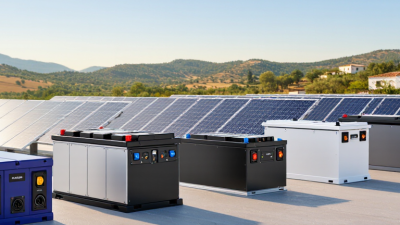
Solar gel batteries are sealed lead-acid batteries designed to store electricity without liquid electrolyte maintenance. Their electrolyte is suspended in silica gel, reducing spill risks during transport and installation. In a Solar And Battery system, they can hold energy from solar panels for evening lighting, backup equipment, or remote monitoring.
Wholesale buyers usually value predictable performance more than a low purchase price. A reliable evaluation checks capacity at the correct discharge rate, cycle life, operating temperature, terminal design, and documented safety testing. Ask for recent test reports, production dates, warranty terms, and packaging photos. Old inventory may look clean but perform poorly. That detail is easy to miss.
Gel batteries also have practical limits. They generally charge more slowly than some newer storage technologies and may suffer damage from overcharging. A suitable charge controller matters. Ventilation is still sensible, even with sealed construction. Buyers should compare usable capacity, not only the printed amp-hour figure. I have seen specifications appear impressive until real load conditions are considered. This is where careful sampling and independent inspection become valuable. A supplier’s response to difficult questions often reveals more than a polished catalog.
| Rank | Representative Supplier Profile | Main Manufacturing Region | Wholesale Product Focus | Common Capacity Range | Nominal Voltage | Typical Design Life | Typical Cycle Life | Common Minimum Order | Typical Lead Time | Export Compliance | Typical Warranty | Best-Fit Wholesale Applications |
|---|---|---|---|---|---|---|---|---|---|---|---|---|
| 1 | Large-scale deep-cycle manufacturer | Jiangsu | Deep-cycle GEL Front-terminal models | 12 V, 33–250 Ah 2 V, 300–3,000 Ah | 2 V, 6 V, 12 V | 12–20 years at 20°C float service | Approximately 600–1,200 cycles at 50% depth of discharge | 100–300 units for standard models | 25–45 days | IEC 61427 testing commonly requested; UN 2800 transport classification for wet, non-spillable batteries | 18–36 months, subject to use conditions | Telecom backup, solar storage, security systems, off-grid power |
| 2 | High-volume automotive and energy-storage producer | Zhejiang | 12 V GEL Solar home systems | 12 V, 20–200 Ah | 12 V | 10–15 years at 20°C float service | Approximately 500–900 cycles at 50% depth of discharge | 200–500 units | 20–40 days | CE, RoHS, ISO 9001 and transport documentation are commonly available on request | 12–24 months | Residential solar kits, small inverters, lighting systems and rural electrification |
| 3 | Specialized industrial battery supplier | Guangdong | High-temperature GEL Front-access batteries | 12 V, 65–200 Ah 2 V, 500–2,000 Ah | 2 V, 12 V | 12–18 years at 20°C float service | Approximately 700–1,200 cycles at 50% depth of discharge | 50–200 units | 30–50 days | IEC 60896-21/22 performance testing is commonly specified for stationary VRLA batteries | 24–36 months | Data centers, telecom shelters, commercial solar plants and backup power |
| 4 | OEM and private-label solar battery factory | Fujian | Custom-label GEL Rack and cabinet systems | 12 V, 50–250 Ah | 12 V | 10–15 years at 20°C float service | Approximately 500–1,000 cycles at 50% depth of discharge | 300–1,000 units for customized orders | 35–60 days for printed packaging or labels | CE, RoHS and MSDS documentation commonly supplied for export orders | 12–24 months | Distributor programs, solar installers and packaged off-grid systems |
| 5 | Value-focused tubular plate battery producer | Anhui | Tubular GEL Frequent cycling | 12 V, 100–250 Ah | 12 V | 10–15 years at 20°C float service | Approximately 700–1,000 cycles at 50% depth of discharge | 100–300 units | 25–45 days | IEC 61427 testing and CE documentation may be requested by solar distributors | 18–24 months | Mini-grids, agricultural pumps, household solar and backup systems |
| 6 | Compact battery supplier for portable and small systems | Jiangxi | Small-format GEL 12 V compact batteries | 12 V, 7–65 Ah | 12 V | 8–12 years at 20°C float service | Approximately 400–800 cycles at 50% depth of discharge | 500–1,000 units | 20–35 days | CE, RoHS and UN 2800 shipping documents are commonly requested | 12–18 months | Emergency lighting, alarms, small UPS units and portable solar generators |
| 7 | Renewable-Energy System integrator with battery production | Shandong | GEL battery banks Solar-plus-storage packages | 12 V, 100–200 Ah 24 V and 48 V battery banks | 12 V, 24 V, 48 V systems | 10–15 years at 20°C float service | Approximately 500–900 cycles at 50% depth of discharge | 20–100 complete systems | 30–55 days | System-level CE documentation and inverter compatibility reports commonly provided | 18–24 months | Remote homes, island systems, agricultural facilities and small commercial projects |
| 8 | Export-oriented industrial VRLA supplier | Henan | Stationary GEL Telecom backup | 2 V, 200–3,000 Ah 12 V, 65–200 Ah | 2 V, 12 V | 12–20 years at 20°C float service | Approximately 600–1,100 cycles at 50% depth of discharge | 50–200 units | 30–50 days | IEC 60896-21/22, ISO 9001 and export safety documentation commonly requested | 24–36 months | Telecom, railway signaling, utility backup and solar control rooms |
| 9 | Mid-size solar distributor and OEM manufacturer | Hubei | General-purpose GEL Distributor packaging | 12 V, 33–200 Ah | 12 V | 10–15 years at 20°C float service | Approximately 500–850 cycles at 50% depth of discharge | 200–500 units | 25–45 days | CE, RoHS and MSDS documents commonly available for standard products | 12–24 months | Solar retailers, backup power dealers and small commercial installations |
| 10 | Project-based energy-storage manufacturer | Yunnan | Off-grid GEL banks High-altitude applications | 12 V, 100–250 Ah 2 V, 500–2,000 Ah | 2 V, 12 V, 24 V and 48 V systems | 10–18 years at 20°C float service | Approximately 500–1,000 cycles at 50% depth of discharge | 20–100 systems or 100–300 individual batteries | 35–60 days | IEC 61427 testing, CE documentation and project-specific test reports commonly requested | 18–36 months | Mountain villages, microgrids, telecom repeaters and remote monitoring stations |
Large factories produce complete batteries and internal components. Smaller factories often handle custom sizes or private-label orders. Trading companies connect buyers with several production lines. This flexibility can blur responsibility.
Request capacity reports, cycle-life data, safety documents, audit records, and warranty terms. Check that every document matches the exact model and factory. Generic certificates are not enough.
Samples reveal performance during repeated discharge and partial charging. Inspect terminals, casing quality, sealing, and leakage resistance. Small faults can grow after installation. Keep test records.
Request production records from the previous three months. Compare output with staffing, equipment, testing, and packaging capacity. A large output figure may exclude final inspections. I learned that too late.
Look for clean assembly areas, controlled electrolyte filling, organized aging racks, and clear batch records. Ask how defective cells are isolated. Check the factory.
Compare landed cost, not only the unit quotation. Include packaging, inspection fees, inland transport, warranty conditions, and raw-material adjustments. A cheap quotation may become expensive after delivery.
Confirm terminal voltage, capacity, carton design, pallet treatment, container loading, and delivery terms. Request commercial invoices, packing lists, origin documents, and destination declarations. Details matter.
It should cover remote diagnosis, installation guidance, charge settings, storage limits, and replacement procedures. Response time matters more than a long warranty statement. Slow replies create real costs.
This guide explores the role of solar gel batteries in renewable energy storage and explains why they are increasingly important in Solar Gel Battery Wholesale markets. It introduces the structure of China’s supplier market, including manufacturers, specialized distributors, and export-oriented trading companies, while presenting a practical framework for understanding the top ten supplier categories without focusing on specific brands. Readers will learn how gel batteries support off-grid solar systems, backup power, telecommunications, and other energy storage applications.
The article also reviews product ranges, battery standards, design features, technical capabilities, and customization options. It explains how to assess supplier quality through certifications, testing procedures, production capacity, pricing transparency, and quality control systems. In addition, it covers export documentation, international shipping arrangements, packaging, delivery coordination, warranty policies, and after-sales support. Together, these insights help buyers compare suppliers more effectively and select dependable partners for long-term wholesale cooperation.