Spain's solar scene is really evolving. It’s not just about generating electricity anymore; now, it’s about creating flexible, easy-to-dispatch Energy Systems. According to IRENA’s Renewable Capacity Statistics 2025, Spain’s solar photovoltaic capacity kept growing through 2024. Meanwhile, the International Energy Agency emphasizes that battery storage is totally crucial for ramping up the share of renewables in the grid. All of these trends mean that reliable 48V solar pack suppliers in Spain are becoming more and more important—whether it’s for homes, farms, telecom towers, or small businesses.
In this guide, we’ll look at ten different suppliers serving the Spanish market — including names like Pylontech, BYD, Dyness, Huawei, Soluna, Victron Energy, Turbo Energy, Sonnen, LG Energy Solution, and WECO. We’ve compared things like usable capacity, cycle life, battery management systems, warranty policies, inverter compatibility, safety docs, and local tech support. And hey, don’t just judge a Battery Pack 48v by its capacity alone. Stuff like installation conditions, communication protocols, enclosure design, and after-sales support really can make a big difference in how well it works for you.
Details, yeah—they totally matter here.
Plus, with new rules coming from the European Commission’s Battery Regulation, there are stricter demands around sustainability, traceability, and detailed product info. Things like IEC 62619 testing, UN 38.3 transport standards, and proper CE certifications should definitely be looked into carefully. But here’s the tricky part—sometimes different brands report their cycle life and other specs using different testing conditions, which makes comparisons a bit tricky. So, think of this ranking as a helpful starting point rather than the final word. Before you sign on the dotted line, double-check the latest certifications, whether they’re officially authorized distributors, warranty exclusions, and if there's proper Spanish local support. And honestly, if a supplier is good at answering your technical questions clearly, that’s often worth more than just going for the lowest advertised price.
Spain’s 48V Solar Pack Market and Its Main Applications
Spain’s 48V solar pack market is expanding beyond remote cabins. It now supports homes, farms, telecom sites, and small commercial facilities.
Red Eléctrica reported over 30 GW of installed solar photovoltaic capacity in Spain during 2024. That growth increases demand for dependable storage during evening peaks and grid interruptions.
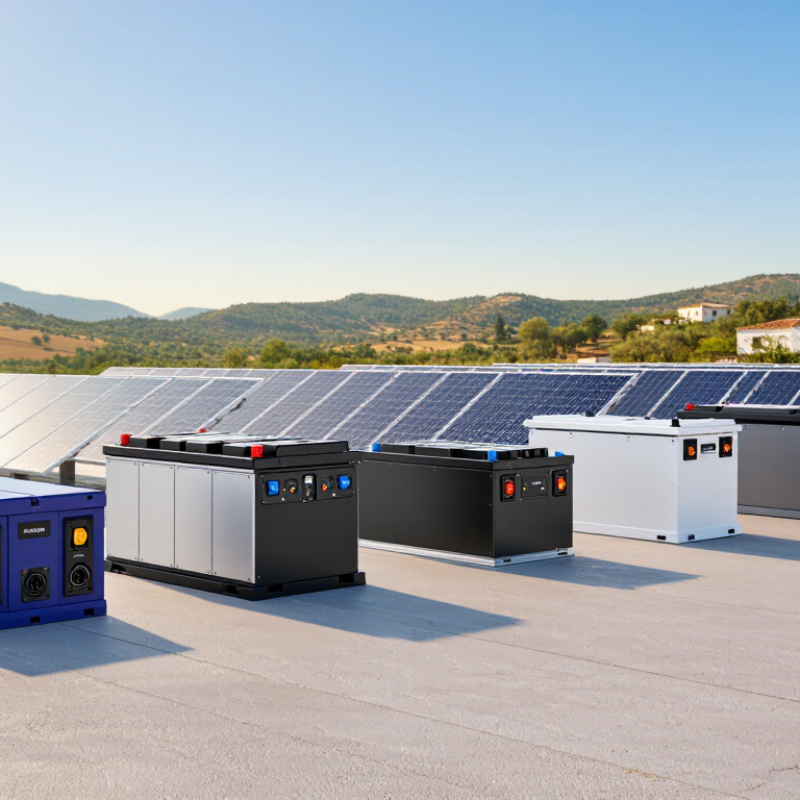
A 48v Battery Pack typically connects with hybrid inverters, rooftop panels, and backup circuits. In rural homes, it can run refrigeration, water pumps, lighting, and internet equipment after sunset.
Agricultural users often value predictable discharge performance more than maximum capacity. Telecom installations need thermal control and remote monitoring. The details matter.
IEA PVPS has identified Spain as one of Europe’s leading photovoltaic markets, while SolarPower Europe continues to report strong growth in European battery storage. However, supplier comparisons remain difficult.
Published capacity figures may ignore usable energy, cycle conditions, warranty limits, and installation quality. A cheaper unit can become expensive in a dusty shed.
Field experience suggests checking local temperatures, ventilation, inverter compatibility, and replacement support before purchasing. Lithium-based systems usually offer practical energy density, but cold-weather performance and fire protection still require careful design.
Not every supplier publishes complete test data. That is a weakness. Buyers should request independent safety certification, clear degradation assumptions, and measured round-trip efficiency, rather than relying only on attractive catalogue numbers.
How to Evaluate 48V Solar Pack Suppliers in Spain
Choosing among 48V solar pack suppliers in Spain requires more than comparing prices. Spain’s solar photovoltaic capacity exceeded 32 GW in 2024, according to Red Eléctrica’s electricity system data. This growth increases demand for dependable storage, especially in homes with evening consumption. Ask suppliers for the battery’s usable capacity, continuous power, peak power, and round-trip efficiency. A Lifepo4 Battery Pack 48v should normally show a nominal voltage near 51.2V, not merely “48V” on a sales page.
Request test evidence, not promotional claims. The IEA Photovoltaic Power Systems Programme reports that battery storage performance depends strongly on operating temperature, charging strategy, and system integration. In a Spanish garage, summer temperatures can exceed 35°C. Check the battery management system’s temperature protections and installation limits. Also verify cycle-life conditions, such as depth of discharge, ambient temperature, and end-of-life capacity. “6,000 cycles” means little without these details. It sounds precise.
Supplier reliability also deserves close inspection. Confirm compliance with applicable European safety and transport requirements, documented factory quality controls, and traceable serial numbers. Request independent test reports for electrical safety, thermal stability, and electromagnetic compatibility. The European Commission’s battery regulation framework emphasizes durability, safety, labelling, and supply-chain transparency. Ask how warranty claims are handled in Spain, including response times and replacement logistics. A low-cost pack may become expensive when troubleshooting requires overseas shipping.
Installation support can reveal practical experience. Evaluate communication quality, inverter compatibility tables, firmware procedures, and Spanish-language documentation. Request two or three recent commercial references, preferably systems exposed to similar heat and grid conditions. I would also compare insurance coverage and recycling arrangements, because these details are often overlooked during purchase.
The Top 10 48V Solar Pack Suppliers in Spain
The Top 10 48V Solar Pack Suppliers in Spain should be judged by field performance, not catalogue claims. Spain’s solar market continues expanding rapidly. IEA PVPS Trends 2024 identifies Spain as one of Europe’s leading photovoltaic markets, supported by strong utility and distributed generation growth. SolarPower Europe’s European Market Outlook 2024–2028 also places Spain among the region’s most important solar markets. This creates demand for dependable 48v Battery Packs in homes, farms, workshops, and small commercial systems.
A practical supplier review should examine usable capacity, cycle life, warranty terms, and local technical support. Lithium Iron phosphate chemistry is usually preferred for stationary storage because it offers strong thermal stability and long service life. Qualified packs should also show clear testing evidence, including IEC 62619 alignment, transport compliance, and battery management system protection. Ask about operation during Spain’s hot summers. Heat can quietly reduce performance. Installation quality matters too, yet it is often ignored.
The strongest suppliers usually provide modular packs from 5kWh to 15kWh, CAN or RS485 communication, and replacement parts within Spain or the European Union. Round-trip efficiency above 90% is a useful benchmark, although real results depend on inverter settings and cable losses. The European Commission’s Battery Regulation adds traceability and sustainability expectations across the supply chain. Still, supplier websites may present incomplete data. Independent testing is better evidence. Pricing also deserves caution, because the cheapest pack may have weaker cells, limited warranty coverage, or poor after-sales support.
Top 10 48V Solar Pack Suppliers in Spain
Common 48V-class lithium iron phosphate battery capacities available through the Spanish solar-storage market.
The chart compares ten commercially established 48V-class storage capacities, ranging from compact 2.4 kWh units to larger 20.48 kWh systems. These capacities are commonly used in residential solar self-consumption, backup power, and small commercial installations in Spain.
Product Features, Battery Types, and Storage Capacities
Spain’s 48V solar-pack market suits homes, farms, and small businesses needing modular energy storage. Supplier comparisons should begin with usable capacity, not advertised capacity. A 10 kWh battery may provide only 8 kWh at an 80% depth of discharge.
Lithium iron phosphate, or LiFePO4, is common because it offers strong thermal stability and long cycle life. Nickel-manganese-cobalt batteries can provide higher energy density, but temperature management becomes more important. Lead-acid systems remain cheaper, although their usable capacity and cycle performance are usually lower. Look for a 51.2V nominal pack, an integrated battery-management system, cell balancing, remote monitoring, and inverter compatibility. Essential details include operating temperature, ingress protection, warranty conditions, and tested cycle limits.
The International Energy Agency reported that global battery-storage additions reached about 42 GW in 2023, nearly doubling in one year. Spain’s revised National Energy and Climate Plan targets approximately 22.5 GW of storage by 2030, increasing demand for reliable systems. Suppliers offering 5–15 kWh modules can support gradual expansion, while 20–50 kWh cabinets suit larger properties. Capacity alone can mislead. I would also check round-trip efficiency, standby losses, and guaranteed end-of-warranty capacity. Some specifications look impressive, but real performance may change under heat, partial charging, or frequent evening cycling. Test evidence matters.
Safety Standards, Certifications, and After-Sales Support
Top 10 48V Solar Pack Suppliers in Spain: Safety Standards, Certifications, and After-Sales Support
When comparing 48V solar pack suppliers in Spain, safety documentation deserves more attention than glossy efficiency claims. A reliable Lifepo4 48v Battery Pack should include clear electrical ratings, cell traceability, protection settings, and installation instructions in Spanish or understandable technical English. Check whether the product carries valid CE marking and supports applicable European requirements, including electromagnetic compatibility and low-voltage safety rules. Certification must match the exact battery model, not a similar-looking series.
Ask suppliers for evidence of IEC 62619 testing, UN 38.3 transport testing, and compliance with the European Battery Regulation where relevant. These documents help assess thermal safety, mechanical resistance, and transport handling. An installer should also verify inverter compatibility, maximum charging current, enclosure protection, and whether the battery management system records alarms. Small details matter. A missing wiring diagram can create real trouble.
After-sales support separates a dependable supplier from a cheap listing. Look for local technical assistance, response-time commitments, spare communication cables, firmware procedures, and a written warranty covering capacity, manufacturing faults, and labor limits. Ask who handles a failed battery after installation. Is collection arranged in Spain, or must the customer ship a heavy unit abroad? Suppliers should provide commissioning guidance and documented fault codes. Some warranties sound impressive but exclude normal installation conditions, so read the exclusions carefully. I would also request references from Spanish installers, while remembering that one successful project does not prove long-term reliability.
Comparing Prices, Warranty Terms, and Delivery Options in Spain
When comparing the top 10 48V solar pack suppliers in Spain, price is only the starting point. A reliable 48v Lifepo4 Battery Pack usually costs about €900–€1,800 for 5 kWh, excluding installation and taxes. Larger 10 kWh systems can exceed €3,000. Ask whether VAT, cables, monitoring equipment, and local delivery are included. Some attractive quotes become less competitive after these additions.
Warranty terms require careful reading. Many suppliers offer five to ten years, but coverage may depend on cycle limits, temperature, or minimum remaining capacity. A warranty covering 6,000 cycles sounds strong, yet daily use can reach that figure sooner than expected. Confirm who pays return transport and labour in Spain. Delivery is also important. Mainland shipments may arrive within one to three weeks, while island deliveries can take longer. Stock status should be written clearly, not promised verbally.
Tips: Request three written quotations with identical capacity and safety features. Check the battery’s usable capacity, inverter compatibility, protection rating, and Spanish support address. Ask for delivery tracking and pallet protection. Do not compare price alone. I once overlooked installation exclusions in a quote; the final cost changed noticeably. That small mistake is easy to repeat. Reliable documentation often matters more than a polished sales page.
Top 10 48V Solar Pack Suppliers in Spain? – Comparing Prices, Warranty Terms, and Delivery Options in Spain
| Rank | Anonymous Supplier Profile | Typical Spanish Coverage | Battery Chemistry | Usable Capacity | Indicative Price
Excl. VAT | Standard Warranty | Typical Delivery in Spain | Common Delivery Options | Best Fit |
| 1 | National solar distributor | Mainland Spain and major islands | LiFePO₄ | 4.8–5.1 kWh | €1,250–€1,650 | 5–10 years | 1–3 business days | Pallet shipment, installer collection, tracking available | Residential backup |
| 2 | Regional photovoltaic wholesaler | Catalonia, Valencia and Aragon | LiFePO₄ | 4.8–5.0 kWh | €1,180–€1,580 | 5–10 years | 2–5 business days | Standard freight, local pickup, appointment delivery | Small installers |
| 3 | Online renewable-energy retailer | Mainland Spain | LiFePO₄ | 4.8–5.1 kWh | €1,300–€1,750 | 5–10 years | 2–6 business days | Courier for compact units; pallet freight for multiple units | DIY buyers |
| 4 | Installer-led storage provider | Madrid, Castilla-La Mancha and central Spain | LiFePO₄ | 4.8–5.2 kWh | €1,450–€2,000 | 7–10 years | 5–10 business days | Site delivery, commissioning, installation coordination | Turnkey projects |
| 5 | Commercial and industrial distributor | Nationwide mainland delivery | LiFePO₄ | 4.8–5.1 kWh | €1,150–€1,550 | 5–10 years | 3–7 business days | Pallet freight, bulk shipment, trade-account terms | Multi-unit installations |
| 6 | Off-grid and rural-energy specialist | Rural mainland locations and remote sites | LiFePO₄ | 4.8–5.0 kWh | €1,350–€1,850 | 5–10 years | 4–10 business days | Scheduled freight, remote-area surcharge may apply | Off-grid systems |
| 7 | Island-focused renewable distributor | Balearic and Canary Islands | LiFePO₄ | 4.8–5.1 kWh | €1,450–€2,100 | 5–10 years | 7–18 business days | Sea freight, island warehouse pickup, scheduled delivery | Island installations |
| 8 | Electrical wholesaler with solar division | Urban areas and local trade counters | LiFePO₄ | 4.8–5.0 kWh | €1,250–€1,700 | 5–10 years | 1–5 business days | Trade-counter collection, local van delivery, pallet freight | Urgent replacements |
| 9 | Energy-storage system integrator | Nationwide project delivery | LiFePO₄ | 4.8–5.2 kWh | €1,600–€2,300 | 7–10 years | 10–20 business days | Project scheduling, delivery with installation and commissioning | Complex hybrid systems |
| 10 | Import-oriented solar equipment reseller | Mainland Spain; stock varies by season | LiFePO₄ | 4.8–5.1 kWh | €1,050–€1,450 | 3–8 years | 7–21 business days | Pre-order shipment, standard freight, limited local stock | Price-sensitive buyers |
Comparison note: Prices are indicative Spanish-market ranges for complete 48V-class LiFePO₄ solar battery packs, generally around 5 kWh nominal capacity, and may vary with inverter compatibility, monitoring hardware, installation, transport, VAT, stock, and exchange rates. Warranty periods, cycle limits, usable capacity, and delivery dates should be confirmed in the supplier’s current written quotation.
12kW Hybrid Solar Inverters for Energy Storage: Insights from IEA, IRENA, and BloombergNEF Reports
The rapid expansion of solar power is increasing demand for flexible energy-storage equipment. The IEA’s *Renewables 2024* report projects that global renewable capacity will expand by nearly 5,500 GW between 2024 and 2030, with solar PV accounting for approximately 80% of this growth. IRENA’s *Renewable Capacity Statistics 2024* also recorded more than 470 GW of new solar capacity added worldwide in 2023. These figures highlight the importance of inverters that can efficiently manage generation, storage, and household or commercial consumption.
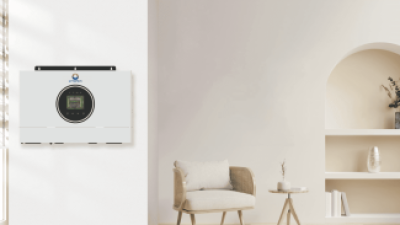
A 12kW hybrid solar inverter with up to 18kW of PV input and 48V battery compatibility is suited to this evolving market. Its high input capacity supports larger solar arrays, while parallel operation of up to nine units allows systems to scale for demanding residential, agricultural, and commercial applications. UPS-level switching can help maintain power continuity, and intelligent load management can prioritize essential circuits when solar production fluctuates or grid power is unavailable.
Energy storage is also becoming central to grid flexibility. BloombergNEF’s *Energy Storage Outlook 2024* forecasts that global energy-storage deployment could reach roughly 1,200 GWh by 2030, driven by falling technology costs and rising renewable penetration. A high-efficiency hybrid inverter can therefore serve as the control hub of a modern energy system, coordinating solar conversion, battery charging, backup supply, and daily load optimization.
Conclusion
Spain’s growing demand for renewable energy has increased interest in reliable 48V solar packs for residential backup, off-grid cabins, telecommunications, agricultural systems, and small commercial installations. This guide explains how to identify a dependable 48v Solar Pack Supplier Spain by assessing product quality, technical expertise, customization options, and local service capabilities. It also reviews important factors such as lithium-ion and other battery types, usable storage capacity, cycle life, charging performance, and compatibility with inverters and solar controllers.
The comparison focuses on safety standards, certification documentation, battery management systems, installation guidance, and after-sales support. Buyers can also evaluate suppliers by comparing pricing structures, warranty coverage, replacement policies, stock availability, and delivery times within Spain. By considering both technical performance and long-term service, customers can select a 48V solar storage solution that offers dependable energy management, practical scalability, and suitable value for their specific application.