Demand for reliable Lifepo4 Battery systems keeps rising across Europe. The International Energy Agency's Global EV Outlook 2024 put global EV battery demand at over 750 GWh in 2023. Stationary storage is growing too, thanks to solar integration, backup power, and grid flexibility.
Poland has become a key location for battery manufacturing and engineering. Companies like LG Energy Solution Wroclaw and Impact Clean Power Technology show how far the country's industrial capabilities have come. Still, production scale alone doesn't prove product quality. Buyers should look closely at cell origin, cycle-life testing, thermal management, certification, warranty terms, and after-sales support.
This guide reviews seven leading options for buyers searching for a Lifepo4 Battery Manufacturer Poland. It weighs technical transparency, manufacturing experience, application range, delivery capability, and customer evidence. The analysis also draws on the European Commission's Strategic Energy Technology Plan and BloombergNEF's battery industry research. Those sources underline how much supply-chain resilience, cost control, and safety performance matter.
Real-world details matter—a lot. A battery might face cold Polish winters, rooftop solar surges, or frequent warehouse charging. Those conditions tend to reveal weaknesses fast. A polished website isn't enough. Public information can be incomplete, and rankings shift as factories, ownership, and technologies evolve. Honestly? That's worth admitting.
The manufacturers selected here aren't meant to be seen as universally perfect. Think of them as practical candidates for comparison. Before signing contracts, buyers should request current datasheets, independent test reports, and references for similar installations. That approach leads to a more reliable decision—especially when choosing a Lifepo4 Battery for commercial, residential, or industrial use.
Poland’s Seven Leading LiFePO4 Battery Manufacturers: Scope and Ranking Criteria
Poland’s seven leading LiFePO4 battery manufacturers are assessed by practical scope, not publicity. The ranking covers local production, battery-pack assembly, cell sourcing, engineering support, and after-sales capability. This approach separates genuine manufacturing capacity from simple import and resale activity.
The evaluation uses five weighted criteria: production scale, cell traceability, safety testing, customization, and delivery reliability. Technical evidence includes UN 38.3 transport testing, IEC 62619 compliance, battery-management design, thermal protection, and cycle-life data. The IEA’s Global EV Outlook 2024 reports that LFP chemistry represented about 40% of global electric-car battery deployment in 2023. Its lower cost and reduced reliance on nickel and cobalt support wider industrial use.
Price and supply stability also matter. BloombergNEF’s 2024 Battery Price Survey placed the average lithium-ion pack price at 115 dollars per kWh, while LFP packs remained cheaper than nickel-based alternatives. This supports a stronger position for suppliers serving solar storage, backup power, and commercial fleets. However, public data is uneven. Some manufacturers disclose factory output, warranty limits, and test conditions clearly; others provide impressive cycle figures without operating temperatures or depth-of-discharge details. That weakness affects ranking confidence. Polish buyers should therefore inspect production records, response times, replacement procedures, and real installation references before accepting any position as definitive.
How LiFePO4 Chemistry Delivers 3.2V Nominal Voltage and Safer Thermal Performance
Lithium Iron Phosphate cells are commonly rated at3.2V nominal voltage. This figure describes the average working voltage, not the cell’s entire range. A fully charged cell may reach about 3.65V, while discharge limits often approach 2.5V. Actual values depend on the manufacturer’s specification.
The chemistry matters for thermal performance. During abuse, LiFePO4 generally releases less oxygen than nickel-rich cathodes. This can reduce the risk of rapid thermal escalation, although it cannot remove it. The International Energy Agency reported that LFP batteries represented about 40% of the global electric-car battery market in 2023. Lower cost and improved safety helped drive that adoption.
For buyers in Poland, cold-weather testing deserves attention. A battery may show acceptable voltage but deliver less power at sub-zero temperatures. Check low-temperature charging protection, cell balancing, enclosure design, and verified test records. The U.S. Department of Energy identifies battery management systems as essential for monitoring voltage, temperature, and current. That detail is easy to overlook.
LFP is safer, not risk-free.
A serious evaluation should ask whether the quoted 3.2V applies to each cell or the complete pack. It should also confirm testing under overcharge, short-circuit, and thermal conditions. Standards-based evidence is more useful than a simple safety claim. One weakness remains: public reports often compare chemistries under different conditions, so their figures are not perfectly interchangeable.
Comparing Capacity, Energy Density, 4,000–8,000 Cycle Life, and 80% DoD
For Poland buyers, the best Battery Lifepo4 manufacturers should be compared beyond nameplate capacity. A 100 Ah, 51.2 V pack stores about 5.12 kWh before losses. At 80% DoD, usable energy falls near 4.10 kWh. Check this figure carefully.
The IEA Global EV Outlook 2024 reports that LFP cells usually offer lower energy density than nickel-rich chemistries, but provide cost and thermal advantages. In practical terms, expect roughly 120–180 Wh/kg at cell level, depending on design. A heavier cabinet may still deliver better value for stationary storage. Capacity matters, but usable capacity matters more.
Cycle claims need disciplined testing. Many suppliers advertise 4,000–8,000 cycles, often measured at 25°C, controlled current, and 80% DoD. Real Polish winters can reduce performance, especially without battery heating. The U.S. National Renewable Energy Laboratory highlights temperature, charging rate, and depth of discharge as major degradation factors. Ask for test conditions, not only a cycle number. Request IEC 62620 or equivalent laboratory evidence, plus capacity-retention curves. Also inspect balancing behavior, inverter compatibility, and warranty exclusions.
A small warning helps. Some datasheets appear precise, yet omit end-of-life capacity. An 8,000-cycle claim may mean 60% retained capacity, not 80%. Compare energy density, safety controls, and service access beside price. Then test one sample under cold-start conditions before placing a larger order.
Evaluating BMS Protection, Cell Balancing, IP Ratings, and Operating Temperatures
For a Poland-focused shortlist of seven LiFePO4 manufacturers, technical verification matters more than catalogue variety. The IEA’s Global EV Outlook 2024 reports that LFP represented nearly 40% of electric-car battery deployments in 2023. That shift supports its safety and cost case, but it does not validate every 12v Lifepo4 Battery pack. Ask for BMS test records, not marketing claims. A credible BMS should provide overcharge, over-discharge, short-circuit, and temperature cut-off protection. It should also state recovery thresholds and continuous current limits.
Cell balancing deserves close inspection. Passive balancing is common, yet suppliers should disclose balancing voltage, start point, and balancing current. For larger packs, active balancing may reduce mismatch, although its added electronics require careful validation. BloombergNEF’s 2023 Battery Price Survey placed average lithium-ion pack prices at 139 dollars per kWh. That figure is a market benchmark, not proof of value for a small pack. Compare usable energy, cycle testing, warranty conditions, and replacement support.
IP ratings must follow IEC 60529 testing, not a vague “waterproof” label. IP65 may resist dust and water jets, while immersion requires a higher, specifically tested rating. Confirm cable glands, vents, and enclosure seams. Operating temperature is equally practical in Poland. Request charge limits below 0°C, discharge limits, heater control, and derating curves. IEC 62619 guidance strengthens industrial battery safety checks, but certification alone cannot reveal poor installation. I have seen specifications omit cold-charge behavior. That omission matters. Buyers should obtain an independent sample test before ordering volume.
Assessing Polish Manufacturers’ Compliance with UN 38.3 and IEC 62619 Standards
When comparing the 7 best LiFePO4 battery manufacturers in Poland, standards evidence deserves close attention. UN 38.3 focuses on transport safety. It covers testing for vibration, shock, pressure, temperature changes, and external short circuits. Ask for a current test report covering the exact battery model.
IEC 62619 examines industrial lithium battery safety during operation. A serious assessment should review overcharge protection, over-discharge control, short-circuit response, and thermal behavior. The Bms Lifepo4 Battery design matters here. Inspect whether the battery management system records faults, balances cells, and disconnects unsafe charging conditions. Request model numbers, revision dates, and laboratory details. Small documents reveal large gaps.
Do not rely on a logo or a broad compliance statement. Verify that the tested configuration matches the proposed pack, including cell type, enclosure, firmware, and wiring. Manufacturing records should support cell traceability and consistent end-of-line testing. Ask how rejected packs are isolated. Ask who approves changes.
In practical reviews, paperwork can look convincing while leaving unanswered questions. I would not treat a certificate as final proof. A translated report may also hide technical limits or expired test conditions. Factory visits, sample testing, and direct interviews with quality engineers provide stronger evidence. Even then, no assessment is perfect. Temperature readings, connector quality, and BMS shutdown behavior deserve repeated checks under realistic loads.
Comparing Warranty Terms, Local Support, Inverter Compatibility, and Total Cost
7 Best LiFePO4 Battery Manufacturers in Poland for Buyers
Warranty terms should be compared beyond headline years. Many LiFePO4 suppliers offer 5–10 years, but capacity retention may fall to 70–80%. Check cycle limits, throughput allowances, exclusions, and replacement procedures. BloombergNEF reported average lithium-ion pack prices at 115 dollars per kWh in 2024. That figure concerns broader battery markets, not complete home systems. Installation costs can still dominate a small Polish project.
Local support is practical, not decorative. Ask whether technicians communicate in Polish, hold replacement modules locally, and provide documented response times. A 24–48-hour response target sounds useful, yet it means little without spare parts. The European Commission identifies energy storage as important for grid flexibility, while Poland’s changing renewable-energy rules make current documentation essential. Support quality should be tested before purchase.
Inverter compatibility deserves careful checking. Confirm battery voltage, maximum charge current, CAN or RS485 communication, firmware requirements, and approved operating temperatures. The International Energy Agency reported that LFP batteries represented nearly 40% of electric-car battery deployments in 2023, reflecting stronger cost and safety interest. Home-storage performance is different. Do not assume automotive data predicts household results. Calculate total cost over ten years, including installation, monitoring, protection equipment, electricity losses, and possible battery replacement. A cheaper unit may become expensive after one failed communication update. I would also request three Polish customer references, although references can be selective and imperfect.
7 Best LiFePO4 Battery Manufacturers in Poland for Buyers
Comparing Warranty Terms, Local Support, Inverter Compatibility, and Total Cost
The chart uses anonymized supplier profiles and a 0–100 buyer score. Warranty reflects typical coverage length and conditions, local support measures service accessibility in Poland, inverter compatibility evaluates communication protocols and system integration, and total cost reflects the estimated value after installation, usable capacity, and warranty coverage. Higher scores indicate a more favorable buying position.
Selecting the Best Polish LiFePO4 Supplier for Solar, RV, Backup, and Industrial Use
Choosing among the 7 best LiFePO4 battery manufacturers in Poland requires more than comparing prices. The right supplier should understand solar systems, RV layouts, backup power, and industrial loads. Ask about cell origin, battery management systems, thermal protection, and production testing. Ask for evidence.
For solar projects, check whether the supplier can match battery voltage, inverter communication, and daily cycling needs. An RV battery needs compact design, secure terminals, low-temperature charging protection, and clear installation guidance. A Lifepo4 Car Battery requires stable starting performance, vibration resistance, and suitable charging limits. Backup systems need dependable reserve capacity, while industrial buyers may require remote monitoring and expandable cabinets.
Polish suppliers should provide traceable test records, safety documentation, warranty terms, and responsive technical support. Verify capacity through independent test results, not only marketing sheets. Confirm delivery schedules and spare-part availability before signing a purchase order. Local support can reduce delays during winter installations. That matters.
In practical sourcing, I would also inspect communication quality. Slow answers may signal difficult after-sales service. No supplier is perfect. A promising quotation can still hide unclear cycle-life conditions or narrow warranty exclusions. Request a sample, review the manual, and discuss real operating temperatures. For demanding sites, ask for references from similar installations, but check them carefully. Reliable selection comes from matching verified performance with the actual application, not choosing the cheapest battery.
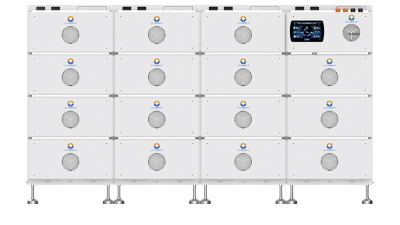
LVTOPSUN LVTS High-Voltage LiFePO₄ Battery Storage: Modular Energy Solutions from 48 to 241 kWh
The HV V1 modular high-voltage LiFePO₄ battery system is designed for reliable and scalable energy storage, supporting capacities from 48 to 241 kWh. Built with high-performance 314Ah battery modules, it enables users to expand storage as energy demands grow, making it suitable for homes, commercial buildings, workshops, and industrial facilities. Its modular architecture also simplifies capacity planning and helps optimize space utilization.
An intelligent battery management system continuously monitors operating conditions, including voltage, temperature, and state of charge, while active cell balancing helps maintain consistent module performance. These features support safer operation, improved charging efficiency, and longer battery service life. The system is compatible with renewable energy applications, backup power strategies, load shifting, and peak-demand management.
Flexible installation options allow the battery system to adapt to different project environments and deployment requirements. Whether installed as a compact residential solution or configured for larger commercial and industrial applications, its expandable design supports phased investment and future energy needs. The LiFePO₄ chemistry provides dependable performance for frequent cycling, while the high-voltage configuration can help reduce current losses and improve overall system efficiency.
FAQS
The assessment considered production scale, cell traceability, safety testing, customization, and delivery reliability.
No. Some suppliers assemble imported cells rather than produce cells locally. Verify factory records and sourcing documents.
Ask for UN 38.3 transport testing, IEC 62619 evidence, BMS records, and thermal-protection test results.
It should protect against overcharging, deep discharge, short circuits, and excessive temperature.
Suppliers may omit recovery thresholds, continuous current limits, and cold-charging restrictions. That omission deserves attention.
Balancing reduces voltage differences between cells and can improve usable capacity and service consistency.
Request the balancing voltage, activation point, and balancing current. Larger packs may require more advanced balancing.
It describes tested resistance to dust and water. Confirm cable glands, vents, seams, and the actual test conditions.
Check charging limits below 0°C, heater control, discharge limits, and temperature-based power reduction.
Not necessarily. Confirm temperature, depth of discharge, test method, warranty limits, and replacement procedures. The ranking remains partly uncertain.
Conclusion
This guide evaluates Poland’s leading LiFePO4 battery manufacturers using practical criteria for residential, mobile, and industrial buyers. It explains how LiFePO4 chemistry provides a stable 3.2V nominal voltage, improved thermal safety, and dependable performance compared with many traditional battery technologies. The comparison considers usable capacity, energy density, expected service life of approximately 4,000–8,000 cycles, 80% depth of discharge, operating temperatures, enclosure protection, and the quality of battery management systems, including overcharge protection and cell balancing.
Buyers will also learn how to assess compliance with UN 38.3 and IEC 62619, warranty coverage, technical support, inverter compatibility, installation requirements, and total ownership cost. Whether the application involves solar storage, RV power, emergency backup, or industrial equipment, selecting the right Lifepo4 Battery Manufacturer Poland requires balancing safety, durability, pricing, certification, and after-sales service. The goal is to help customers identify a dependable local supplier whose battery specifications and support capabilities match their intended operating conditions.