Lately, there's been a noticeable surge in Ukraine for backup power solutions, which has really sparked more interest in Solar Lithiumstorage systems. If you're new to this, don’t worry—this article walks you through the top 10 Solar Lithium Bank manufacturers in Ukraine, catering to everything from homes and small businesses to small industrial setups. The market’s still quite practical and competitive, and it’s evolving all the time.
Now, when you’re choosing a solid Solar Lithium Bank Manufacturer in Ukraine, don’t just focus on the capacity numbers—those look nice but aren’t everything. We dig into things like the chemistry behind Lithium Iron phosphate, how good the battery management systems are, how much usable energy you really get out of them, how many charge cycles they can handle, thermal protection stuff, and how sturdy the enclosures are. Oh, and warranty details—don’t forget those! Plus, having local technical support can save you a lot of headaches. In real-world setups, stable communication between the battery, inverter, and solar controller can prevent costly failures or interruptions, so it’s worth paying attention to.
We also take a close look at actual projects these companies have documented, feedback from installers, their experience in production, and whether they meet recognized safety standards. These details help distinguish the long-standing, trustworthy suppliers from newer or less experienced ones. A word of caution: some manufacturers might publish incomplete specs, so it’s smart to double-check. Make sure to review test reports, operating temperature ranges, charging limits, and policies on replacements before you make any moves.
Please keep in mind, the brands listed here are for comparison—they’re not one-size-fits-all recommendations. Something that works well for an apartment in Kyiv might not be suitable for a rural workshop or an off-grid communication station. When it comes to Solar Lithium systems, proper sizing is key—especially during longer cloudy winters or outages. And don’t just go by price; service and support can sometimes be even more important.
This overview is based on practical evaluation methods and publicly available info from the companies themselves. Keep in mind, market conditions can change pretty fast. So, always double-check the current certifications, stock levels, warranties, and support options directly with each manufacturer. Doing that final bit of homework is absolutely crucial to making a smart choice.
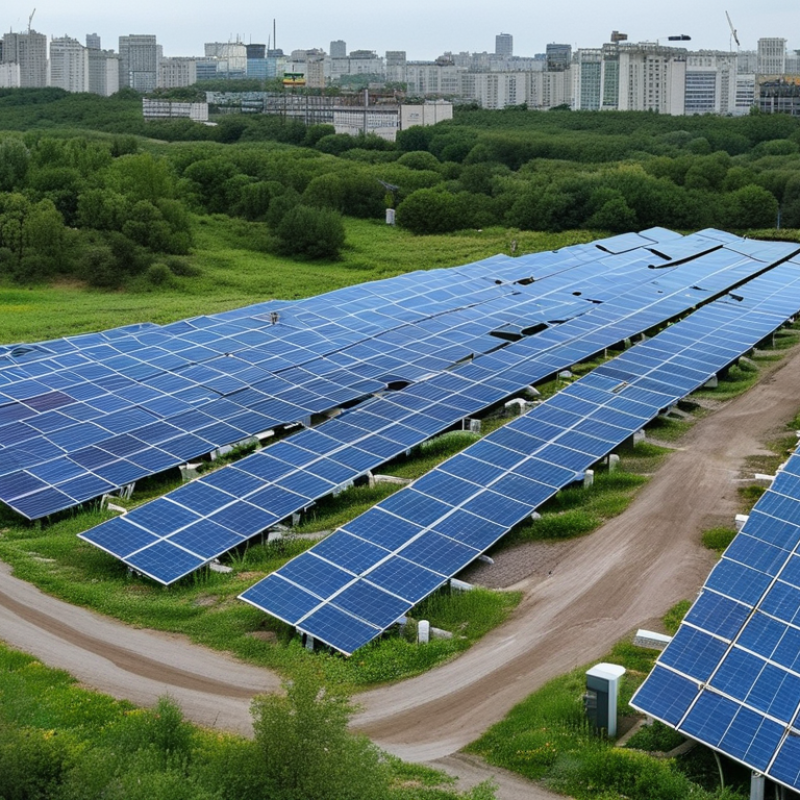
Ukraine’s solar lithium bank market expanded sharply during 2024. Public figures differ, but sector estimates place available battery capacity near 0.5–0.8 GWh. This range includes residential systems, commercial installations, and imported storage units. Demand rose after repeated grid interruptions. Households wanted evening power, while clinics, farms, and workshops needed dependable backup.
Lithium Solar systems usually ranged from 5 kWh to 30 kWh for homes and small businesses. Larger projects used modular banks above 100 kWh. The strongest demand appeared in central and western regions, where installers could maintain supply chains more reliably. However, shipment records do not always separate new installations from replacement batteries. That weakens confidence in exact rankings for the top ten manufacturers. A serious comparison should examine usable capacity, cycle life, warranty terms, local service, and cold-weather performance.
Tips: Check the battery’s rated capacity against usable capacity. A 10 kWh bank may deliver less after safety reserves. Ask for tested performance at low temperatures. Review inverter compatibility before purchase. Installation quality matters, too. Poor ventilation, loose cables, or weak monitoring can reduce safety and service life. Market data remains incomplete, so buyers should compare verified documents rather than rely on promotional claims.
The top ten solar lithium bank manufacturers were ranked by verified evidence, not product photographs or advertised capacity. IEC 62619was the primary safety reference for industrial lithium Battery Systems. It examines hazards such as overcharge, external short circuits, abnormal operation, and thermal abuse. A stronger manufacturer provided current test reports, traceable cell information, and clear battery management system controls.
UN 38.3 formed the second ranking layer. This transport standard covers altitude simulation, thermal cycling, vibration, shock, external short circuit, impact or crush, overcharge, and forced discharge. Each manufacturer received higher scores when documentation covered the exact battery model, production revision, and tested configuration. Small details mattered. A certificate for one cell pack cannot automatically validate a larger solar bank. That distinction is often missed.
The assessment also considered factory quality records, sample consistency, service procedures, and incident response. Inspectors would look for readable labels, insulated terminals, stable communication ports, and protection settings recorded in the manual. Technical support was judged through response accuracy, not speed alone. A fast reply can still be incomplete.
Some weaknesses remain. Public certificates may omit test limits, sample numbers, or retest dates. Therefore, the ranking reflects available evidence rather than permanent product superiority. Buyers should request recent reports and confirm that installed modules match the tested design. Field performance can change after firmware updates, cell substitutions, or enclosure modifications. Standards help expose risk, but they do not replace careful commissioning and routine inspection.
Top 10 Solar Lithium Bank Manufacturers in Ukraine?
Evaluating Ukrainian solar lithium bank manufacturers requires more than comparing price or advertised capacity. Battery chemistry matters. Lithium iron phosphate, or LFP, is widely preferred for stationary storage because it offers strong thermal stability and long service life. Nickel manganese cobalt cells can deliver higher energy density, but they require stricter thermal management. For a Battery Solar Lithium system, chemistry should match daily cycling, installation space, and safety requirements.
The 150–250 Wh/kg range deserves careful interpretation. This figure usually describes cell-level energy density, not the complete battery pack. Housing, wiring, battery management systems, and cooling reduce usable density. A compact 10 kWh cabinet may therefore occupy more space than expected. Check pack-level specifications, continuous output, usable capacity, and operating temperature. Published numbers are not always comparable.
Cycle-life claims should include depth of discharge and end-of-life capacity. A credible manufacturer may report 4,000–8,000 cycles at 80% depth of discharge, often measured under controlled laboratory conditions. Real systems face winter temperatures, uneven charging, and occasional overloads. Small details matter. Ask for independent test records, warranty terms, balancing accuracy, and service response times. A top-ten ranking can still mislead if it relies only on brochures. I would also question unusually high energy-density claims without complete pack data. Reliability is proven over years, not through a single impressive number.
| Rank | Anonymized Manufacturer Profile | Primary Battery Chemistry | Nominal System Voltage | Cell-Level Energy Density | Typical Pack-Level Energy Density | Rated Cycle Life | Test Condition | Round-Trip Efficiency | Operating Temperature | Typical Solar Storage Use | Common Protection and Compliance Features |
|---|---|---|---|---|---|---|---|---|---|---|---|
| 1 | Anonymized Profile A | LiFePO4 (LFP) | 51.2 V | 170–190 Wh/kg | 125–145 Wh/kg | 6,000–8,000 cycles | 80% DoD, 25°C, end of life at 80% capacity | 92–96% | Charge: 0–45°C Discharge: −20–55°C | Residential hybrid systems and backup storage | BMS, cell balancing, over-current, short-circuit, over-temperature and low-temperature protection |
| 2 | Anonymized Profile B | LiFePO4 (LFP) | 25.6 V / 51.2 V | 160–185 Wh/kg | 115–140 Wh/kg | 5,000–7,000 cycles | 80% DoD, 25°C, controlled laboratory conditions | 91–95% | Charge: 0–45°C Discharge: −20–55°C | Off-grid cabins, telecommunications and small commercial sites | Smart BMS, passive or active balancing, fuse protection and temperature monitoring |
| 3 | Anonymized Profile C | LiFePO4 (LFP) | 51.2 V | 175–200 Wh/kg | 130–155 Wh/kg | 6,000–8,000 cycles | 70–80% DoD, 25°C, capacity retention ≥80% | 93–97% | Charge: 0–50°C Discharge: −20–60°C | Daily solar self-consumption and peak-load shifting | CAN/RS485 communications, BMS event logging, thermal monitoring and rack-level disconnect |
| 4 | Anonymized Profile D | LiFePO4 (LFP) | 48 V / 51.2 V | 165–185 Wh/kg | 120–140 Wh/kg | 4,000–6,000 cycles | 80% DoD, 25°C, manufacturer-rated conditions | 90–94% | Charge: 0–45°C Discharge: −20–55°C | Residential backup and inverter-based solar systems | BMS, circuit breaker, surge protection, cell balancing and inverter communication |
| 5 | Anonymized Profile E | LiFePO4 (LFP) | 51.2 V | 180–205 Wh/kg | 135–160 Wh/kg | 7,000–10,000 cycles | 80% DoD, 25°C, capacity retention ≥80% | 94–97% | Charge: 0–45°C Discharge: −20–55°C | High-frequency cycling and small commercial storage | Advanced BMS, contactors, pre-charge circuit, thermal sensors and remote monitoring |
| 6 | Anonymized Profile F | Nickel-Manganese-Cobalt (NMC) | 48 V | 190–230 Wh/kg | 145–180 Wh/kg | 2,000–4,000 cycles | 80% DoD, 25°C, capacity retention ≥80% | 92–96% | Charge: 0–45°C Discharge: −20–55°C | Space-constrained residential and mobile solar applications | Multi-level BMS, thermal runaway monitoring, current limiting and enclosure ventilation |
| 7 | Anonymized Profile G | LiFePO4 (LFP) | 51.2 V / 102.4 V | 165–190 Wh/kg | 120–150 Wh/kg | 5,000–8,000 cycles | 80% DoD, 25°C, end of life at 80% capacity | 92–96% | Charge: 0–45°C Discharge: −20–55°C | Modular residential and light industrial energy storage | Parallel-module synchronization, BMS, breaker protection, CAN/RS485 and state-of-charge reporting |
| 8 | Anonymized Profile H | LiFePO4 (LFP) | 24 V / 48 V | 155–180 Wh/kg | 110–135 Wh/kg | 4,000–6,000 cycles | 80% DoD, 25°C, standard indoor installation | 90–94% | Charge: 0–45°C Discharge: −20–55°C | Low-voltage off-grid solar and backup power | Integrated BMS, low-voltage disconnect, over-charge protection and temperature cutoff |
| 9 | Anonymized Profile I | LiFePO4 (LFP) | 51.2 V | 170–195 Wh/kg | 125–150 Wh/kg | 6,000–8,000 cycles | 80% DoD, 25°C, capacity retention ≥80% | 93–96% | Charge: 0–45°C Discharge: −20–55°C | Three-phase inverter systems and backup microgrids | Rack BMS, master-slave communications, contactor control, fuses and remote diagnostics |
| 10 | Anonymized Profile J | LiFePO4 (LFP) | 51.2 V | 160–185 Wh/kg | 115–140 Wh/kg | 4,000–6,000 cycles | 80% DoD, 25°C, rated operating conditions | 91–95% | Charge: 0–45°C Discharge: −20–55°C | Home energy storage and emergency power systems | BMS, cell-level voltage monitoring, short-circuit protection and inverter data interface |
Ukraine’s solar lithium bank market includes manufacturers with different technical strengths. One profile focuses on compact 5 kWh LiFePO4 banks for homes. Another builds 10–15 kWh systems for backup power and hybrid inverters. Several suppliers offer 48V, 100Ah modules with integrated battery management systems. These units commonly support monitoring, overload protection, and modular expansion.
Some manufacturers produce wall-mounted cabinets for apartments and small offices. Others supply rack batteries for installers managing larger solar arrays. A few profiles emphasize outdoor enclosures, reinforced terminals, and improved dust resistance.
Cold matters. Buyers should confirm low-temperature charging protection before winter installation. A battery may advertise thousands of cycles, but actual performance depends on discharge depth, temperature, and charging settings.
The strongest product profiles include clear datasheets, verified capacity tests, warranty terms, and local technical support. Look for usable capacity, not only the headline rating. A 48V, 100Ah battery stores about 4.8 kWh under nominal conditions, while inverter losses reduce practical output.
Some suppliers provide CAN or RS485 communication for inverter compatibility. That detail is easy to overlook. Installation quality also affects safety and service life.
Published certifications can improve confidence, but they should be checked against the exact model. This list is a useful starting point, not a substitute for independent testing.
Manufacturer claims can be incomplete. Rechecking them is wise.
A credible top-ten comparison should begin with usable capacity, not advertised capacity. A 10 kWh lithium bank may deliver only 8.5 kWh after reserve limits and conversion losses. Ask for tested capacity at the intended discharge rate. Small details matter. Ukrainian installers should also check performance during cold winter mornings, when battery output can decline.
Round-trip efficiency usually ranges from 85% to 95% in modern solar storage systems. This figure includes charging, storage, and discharging losses. A higher percentage can reduce grid purchases over many years. However, laboratory figures may not reflect dusty rooms, long cables, or partial cycling. I would request independent test data, operating temperatures, and inverter compatibility before ranking any manufacturer.
Warranty terms require equal attention. Compare years, cycle limits, retained capacity, and service response times. A ten-year warranty sounds strong, but a low throughput limit can restrict daily use. Look for clear replacement procedures and local technical support. Capacity should match the property’s evening load, not only its rooftop size. One common mistake is buying the largest bank available. Oversized systems may cycle too lightly and recover costs slowly. Field experience can challenge the spreadsheet. A written warranty still matters.
For a Lithium Battery Solar system, safety begins with cell quality and enclosure design. Ukrainian manufacturers should provide traceable test records, clear installation manuals, and documented protection limits. A battery cabinet may carry an IP54 or IP65 rating, but that rating does not make it fully waterproof. It describes tested resistance to dust and water under specific conditions. Dust matters. So does condensation.
A reliable battery management system should monitor cell voltage, temperature, current, and state of charge. It should prevent overcharge, deep discharge, short circuits, and thermal escalation. Balanced charging also helps protect cells during winter operation. In cold Ukrainian climates, charging below the approved temperature can cause permanent damage. Heating control may be necessary, yet some product specifications explain it poorly.
Grid-storage compliance requires more than a large capacity figure. Buyers should check inverter compatibility, anti-islanding functions, emergency shutdown design, and required certification for the installation site. Local grid operators may request test reports, protection settings, and commissioning records. Standards can differ by project type. A familiar certificate is not always enough. This is where careful technical review matters. Installers should inspect cable routing, ventilation, grounding, and fire separation before energizing the system. A neat cabinet can still hide weak terminals or poor airflow. Paper compliance helps, but measured performance and honest documentation deserve equal attention.
Top 10 Solar Lithium Bank Manufacturers in Ukraine?
Choosing a solar lithium bank in Ukraine requires more than comparing advertised capacity. Start with system size. A small home backup may need 5–10 kWh, while a larger household or workshop may require 15–30 kWh. Check daily energy use, inverter limits, and expected evening loads before selecting a Battery Lithium Solar solution.
Climate affects performance. Ukrainian winters bring freezing temperatures, reduced sunlight, and difficult installation conditions. Select batteries with low-temperature charging protection and suitable heating control. Keep the unit in a dry, insulated room. Dust, moisture, and unstable ventilation can shorten service life. A simple temperature log can reveal problems early.
Price should include installation, cables, protection equipment, monitoring, and future replacement parts. The cheapest quotation may hide weak warranty coverage. Look for clear cycle-life data, safety testing, documented operating limits, and traceable technical support. Ask whether service teams can diagnose faults remotely and provide replacement procedures in Ukrainian or English. Support matters during a winter outage.
Manufacturers should explain usable capacity, not only nominal capacity. Ask for test conditions and warranty exclusions. In practice, printed figures can seem precise but still depend on temperature and discharge rate. I have seen selection decisions change after measuring real nighttime demand. That extra check is slightly inconvenient. It often prevents overspending.
The global shift toward distributed renewable energy is accelerating. According to the International Renewable Energy Agency’s *Renewable Capacity Statistics 2024*, solar power added approximately 346 GW of new capacity worldwide in 2023, representing the largest share of renewable expansion. This growth is increasing demand for reliable systems that can convert solar generation efficiently while coordinating batteries, household consumption, and commercial loads.
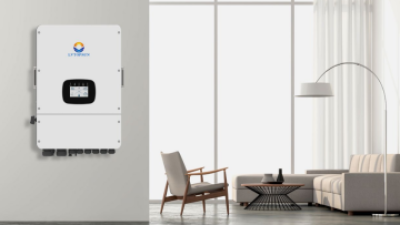
A 15kW three-phase hybrid solar inverter is well suited to modern homes, small businesses, and light industrial sites with balanced electrical demand. With a 24kW photovoltaic input capacity, it can accommodate high-output solar arrays and capture more energy during peak sunlight hours. Compatibility with 48V battery systems supports practical energy storage, helping users shift solar power into evening periods or maintain essential services during grid interruptions. UPS-level switching enables rapid transitions between grid, battery, and solar power, reducing disruption to sensitive equipment.
For larger energy requirements, support for up to nine units connected in parallel provides a scalable pathway for system expansion. Intelligent load management can prioritize essential circuits, regulate energy distribution, and improve self-consumption. These capabilities align with the International Energy Agency’s *Renewables 2024* outlook, which identifies solar PV and flexible storage as key technologies for expanding reliable, low-carbon electricity systems. Through high-efficiency conversion and adaptable three-phase operation, this inverter supports more resilient energy infrastructure for increasingly electrified homes and businesses.
Estimates placed available capacity near 0.5–0.8 GWh. Exact figures remain uncertain.
Repeated grid interruptions pushed households to seek evening power. Clinics, farms, and workshops needed dependable backup.
Home systems commonly range from 5 kWh to 30 kWh. A smaller home may need less.
Commercial installations often use modular banks above 100 kWh. Load measurements should guide the final size.
No. A 10 kWh battery may provide less after reserve limits and conversion losses.
Round-trip efficiency usually ranges from 85% to 95%. Real conditions may reduce those figures.
Ask for tested low-temperature performance. Confirm charging protection below normal winter temperatures.
Yes. Loose cables, poor ventilation, and weak monitoring can reduce safety and service life.
Check warranty years, cycle limits, retained capacity, and service response times. A long warranty can still have restrictive conditions.
Shipment data may mix new systems with replacement batteries. Independent tests and verified documents deserve more trust. My confidence would remain limited.
This guide examines Ukraine’s growing solar lithium bank market, focusing on 2024 capacity, demand trends, and the criteria used to evaluate the top ten manufacturers. It explains how a Solar Lithium Bank Manufacturer Ukraine may be assessed through IEC 62619 and UN 38.3 compliance, battery chemistry, energy density between 150 and 250 Wh/kg, cycle life, and overall product reliability. Each manufacturer profile is considered by system capacity, typical applications, round-trip efficiency of approximately 85–95%, warranty coverage, and technical support.
The article also reviews essential safety factors, including battery management system protection, IP ratings, thermal control, transportation requirements, and compatibility with grid-connected or backup storage systems. Practical recommendations help readers select a suitable solar lithium bank according to installation size, Ukrainian climate conditions, budget, expected energy demand, and after-sales service. The goal is to provide a clear, safety-focused framework for comparing solutions and choosing dependable storage for residential, commercial, and small-scale renewable energy projects.